All information on this site is provided by Mubite for educational purposes only, specifically related to financial market trading. It is not intended as an investment recommendation, business advice, investment opportunity analysis, or any form of general guidance on trading investment instruments. Trading in financial markets involves significant risk, and you should not invest more than you can afford to lose. Mubite does not offer any investment services as defined under the Capital Market Undertakings Act No. 256/2004 Coll. The content on this site is not directed toward residents in any country or jurisdiction where such information or use would violate local laws or regulations. Mubite is not a brokerage and does not accept deposits.
Mubite s.r.o., Skolska 660/3, ICO: 23221551 Prague 1, 110 00, Czech Republic | Copyright Ⓒ 2025 Mubite. All Rights Reserved.

Most traders do not fail crypto prop challenges because they lack entries. They fail because challenges are designed to test risk behavior under stress. The rules convert small mistakes into hard stops, and crypto adds extra friction through volatility, liquidity gaps, and execution costs.
Our team reviews funded performance patterns often. The failures are rarely mysterious. They cluster around sizing, drawdown math, and impulse execution. Regulators make a similar point about fast trading in general. The U.S. SEC has warned for years that day trading can produce severe losses and may be unsuitable for many individuals. That warning is not crypto specific, but the behavior map is the same.
Below are the seven failure modes we see most often, plus fixes you can apply immediately.
In a personal account, a trader might survive a bad day by depositing more or waiting it out. In a challenge, you cannot. If the daily loss limit is 3%, risking 1% per trade can end your day in three clean losses. That is before execution friction even shows up.
Fix: Build risk from the rule down. As a baseline, many disciplined challenge traders keep single-trade risk closer to 0.25% to 0.5% until they have rhythm. That gives room for normal variance. It also reduces the chance that one mistake ends the attempt.
The goal is not faster passing. The goal is surviving long enough for your edge to show. If you want to sanity-check how your limits are defined, scan the challenge rules on Mubite as part of your pre-trade setup.
This is the most avoidable failure. Many traders assume drawdown is static. In many rule sets, drawdown is equity-based, and it may be trailing. That means the threshold can move as you hit new peaks. Investopedia’s drawdown definition is peak to trough. If you do not track peaks, you cannot track risk properly.
Fix: Confirm the drawdown type before day one, then trade as if it is tighter than it looks. If the rule trails from a high-water mark, treat every new equity high as a new reference point. Your plan should include a simple “equity high today” note.
That habit prevents surprise breaches. If you want a deeper foundation, this is where drawdown education matters because it changes sizing decisions, not just theory.
Overtrading is usually disguised as working hard. In challenge conditions, it is often a cost trap. The more you trade, the more you pay in spread, fees, and slippage. Academic research on frequent trading supports the general idea that high turnover tends to hurt individual performance. Barber and Odean’s well-known work in The Journal of Finance summarizes it bluntly: trading is hazardous to wealth.
Fix: Cap your daily trade count and make each trade earn its spot. If your best setups are two to five per day, then ten trades is usually a sign of impatience. Also watch your execution style. If most fills are taker, you are paying for immediacy on every click. That is where maker vs taker fees becomes a real performance lever, especially for high-frequency behavior.

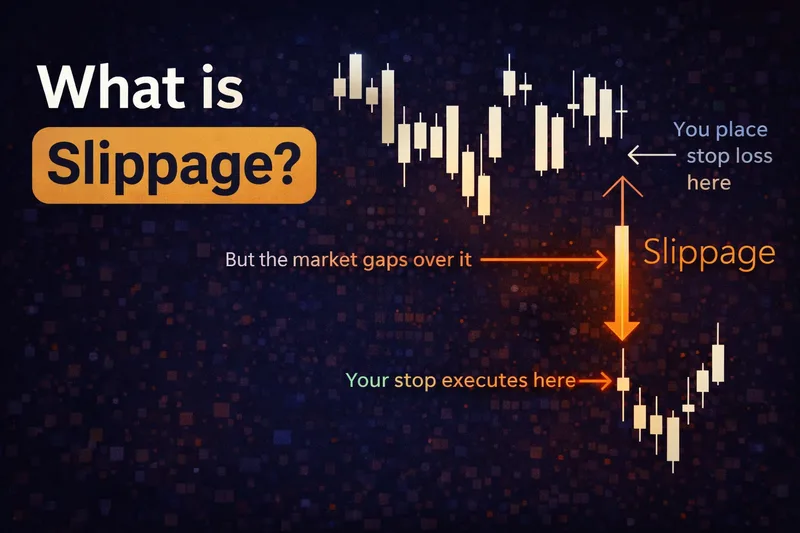
Crypto traders often plan risk based on a stop level, then get shocked by the fill. That shock is slippage. Investopedia defines slippage as the difference between the expected price of a trade and the price it is executed at. It is most common during high volatility and when market orders are used.
Stop orders make this worse because many stops effectively become market orders when triggered. Investopedia notes that stop orders may not execute at the exact stop price, and that difference is slippage driven by liquidity, volatility, and gaps.
Fix: Treat slippage as part of your risk model. Reduce size during fast markets. Prefer deeper pairs when possible. Avoid thin liquidity windows if you do not need to trade them.
Most traders do not choose a time frame. Their emotions choose it. A trader with limited screen time tries to scalp. A trader who loves action trades M1 all day. Then fatigue and impatience do the rest.
Fix: Choose the time frame that matches your life and your limits. If you can only focus for 60 to 90 minutes, your plan should not require constant monitoring. If you need fewer decisions, a higher time frame often helps. A helpful rule is to pick one primary approach and stick with it, rather than switching after every loss. If you want a structured breakdown, weave in the best time frame for crypto trading as a natural reference point.
This is the classic failure sequence: one loss, then a bigger loss, then “I need to make it back today.” In our reviews, this is one of the fastest paths to a daily-loss breach. It is also why strong traders use stopping rules.
Fix: Create a personal daily stop that is tighter than the platform’s hard limit. If the rule is 3% daily loss, many disciplined traders stop at 1.5% to 2%. That buffer protects your account and your psychology. It also forces you to live to trade tomorrow.
This is not just a motivation point. FINRA requires broker-dealers that promote day-trading strategies to provide a prominent day-trading risk disclosure. The reason is simple. Frequent trading plus leverage plus emotion can blow accounts up quickly.
The biggest difference between traders who eventually pass and traders who repeat failures is review quality. A journal is not about writing feelings. It is about isolating one failure mechanism and removing it.
Fix: Review like an operator. Track setup type, risk size, entry type, exit type, and rule proximity. Then fix one leak at a time. If you trade under structured constraints, the challenge rules context matters here because your review should include how close you were to the limit each session. If you want a broader foundation for the whole model, this fits inside the wider crypto prop trading framework.
Use this as a quick self-audit.
Keep risk per trade small and consistent across the session.
Stop trading before you approach the hard daily limit.
Reduce size after a losing streak, not after a win streak.
Avoid thin liquidity windows where stops slip more.
Track equity highs if the drawdown trails.
Crypto prop challenges reward traders who can stay inside limits while remaining consistent. The seven reasons above are not theory. They are the most common paths to failure, and the fixes are operational. If you control sizing, execution, time frame, and fatigue, you stop failing for avoidable reasons. Then your strategy finally gets a fair chance to work.
Because challenges punish risk errors more than signal errors. A good strategy can still fail if position sizing is too large, if drawdown math is misunderstood, or if execution costs stack up through overtrading. In crypto, fast volatility can also cause slippage on stops, which makes real losses bigger than planned losses. The solution is to trade the rule set first. Your edge only matters after you prove you can stay inside limits for long enough.
Oversizing is the fastest failure. If you risk too much per trade, you need only a few normal losses to hit the daily limit. Traders often oversize because they feel time pressure and want to “finish” the challenge. That mindset usually increases trade frequency and reduces selectivity too. A better approach is to set a small fixed risk per trade and a tighter personal daily stop. This keeps you in the game and reduces emotional trading.
First, reduce unnecessary trades. Cost control starts with fewer, higher-quality attempts. Second, use order types that fit conditions. Limit orders in normal markets can reduce negative slippage, while market orders should be reserved for moments where execution certainty matters more than price. Third, avoid thin liquidity windows and oversized positions that walk the book. Finally, monitor whether you are mostly paying taker fees. If you are, your cost base will stay high unless you change execution behavior.
Share it with your community