All information on this site is provided by Mubite for educational purposes only, specifically related to financial market trading. It is not intended as an investment recommendation, business advice, investment opportunity analysis, or any form of general guidance on trading investment instruments. Trading in financial markets involves significant risk, and you should not invest more than you can afford to lose. Mubite does not offer any investment services as defined under the Capital Market Undertakings Act No. 256/2004 Coll. The content on this site is not directed toward residents in any country or jurisdiction where such information or use would violate local laws or regulations. Mubite is not a brokerage and does not accept deposits.
Mubite s.r.o., Skolska 660/3, ICO: 23221551 Prague 1, 110 00, Czech Republic | Copyright Ⓒ 2025 Mubite. All Rights Reserved.

If you trade crypto more than casually, maker vs taker fees is one of those “small” mechanics that quietly decides whether your strategy stays profitable at scale. Most exchanges price crypto trading fees using a maker–taker model: you pay one rate if your order adds liquidity to the order book (maker), and another rate if it removes liquidity immediately (taker). The tricky part is that fee type depends on how your order fills, not just what button you clicked.
This guide keeps it practical for intermediate traders: what maker/taker really means, how to spot it before you place an order, and how to reduce fees without wrecking your execution.
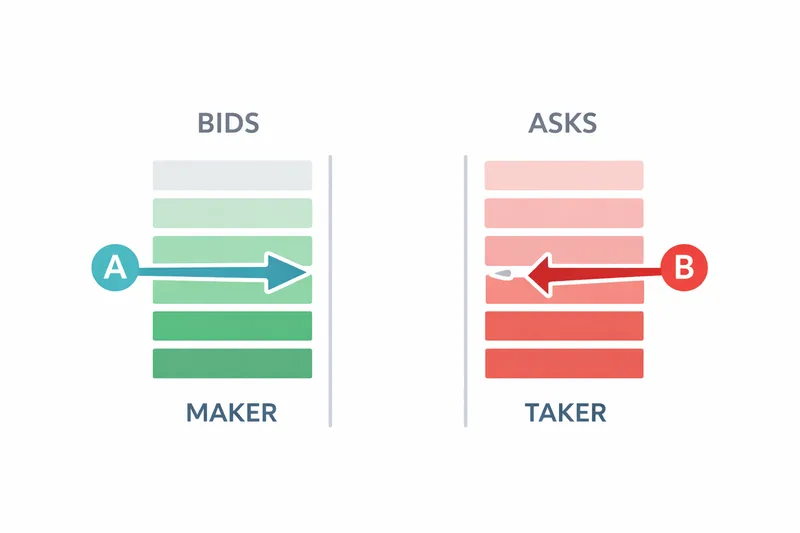
Think in order-book terms: a maker is the trader who adds liquidity by placing an order that sits on the book. This is usually a limit order that doesn’t fill immediately – it rests there and waits for someone else to trade into it. A taker, on the other hand, removes liquidity by executing against what’s already available on the book. That’s typically a market order, or a limit order placed aggressively enough that it matches instantly.
The part that trips people up is that a limit order isn’t automatically “maker.” If you place a limit order that crosses the spread and gets filled right away, it behaves like a taker because you didn’t add liquidity – you consumed it. Meanwhile, market orders are almost always taker orders because their whole purpose is immediate execution at the best available price.
If you remember nothing else, remember this: maker vs taker is decided at fill-time. The exact same “limit order” can be a maker in one moment (if it rests) and a taker in another (if it fills immediately).
When you’re trading frequently, fees aren’t a rounding error — they’re a strategy input. If you’re building a repeatable process, our crypto trading guides can help you connect execution choices like maker/taker into a full trading workflow. They also bite in high turnover trading: you don’t need crazy fee rates to feel pain, you just need them to be consistent across dozens or hundreds of fills.
And in fast volatility, paying taker fees can be the right call because execution certainty matters – but it only works if you’re choosing that cost on purpose, not defaulting into it.
Also remember: fees are only one layer of execution cost. You often “pay” just as much (or more) through the spread and slippage.
Spread: the gap between bid and ask that you cross when you take liquidity
Slippage: fills that come in worse than expected as the order book shifts
So the real question isn’t “How do I always be maker?” It’s: When is certainty worth paying for, and when can you afford to be patient?

Before you place the order, run a quick mental check. This is the simplest way to stop paying taker fees by accident. If your order will fill immediately, it’s typically taker. If it will rest on the book, it’s typically maker.
Here’s the practical checklist (use it fast, like a pre-flight):
Am I crossing the spread right now?
If yes, you’re likely taker (you’re matching immediately).
Will this order show up on the book and wait?
If yes, you’re likely maker.
Did I choose “market,” or a limit price that’s guaranteed to fill?
That’s usually taker behavior.
After you apply this for a week, you’ll start to feel when you’re paying for immediacy–and you’ll stop being surprised by fees in your trade history.

If you’re comparing venues, Bybit trading fees follow the standard maker/taker logic—so your execution style (resting vs crossing) is often more important than obsessing over a single headline rate. That´s why we highlight Bybit in our ecosystem.
This is where intermediate traders can level up fast: you can improve your fee profile without changing your strategy at all – just by upgrading how you execute the same setup. In other words, maker taker fees aren’t just an exchange detail; they’re part of your execution design.
Entry execution:
If your strategy buys pullbacks, you usually don’t need instant fills. A resting limit at your level can earn maker-style execution and keep fees lower – instead of paying taker fees because you got impatient and clicked market.
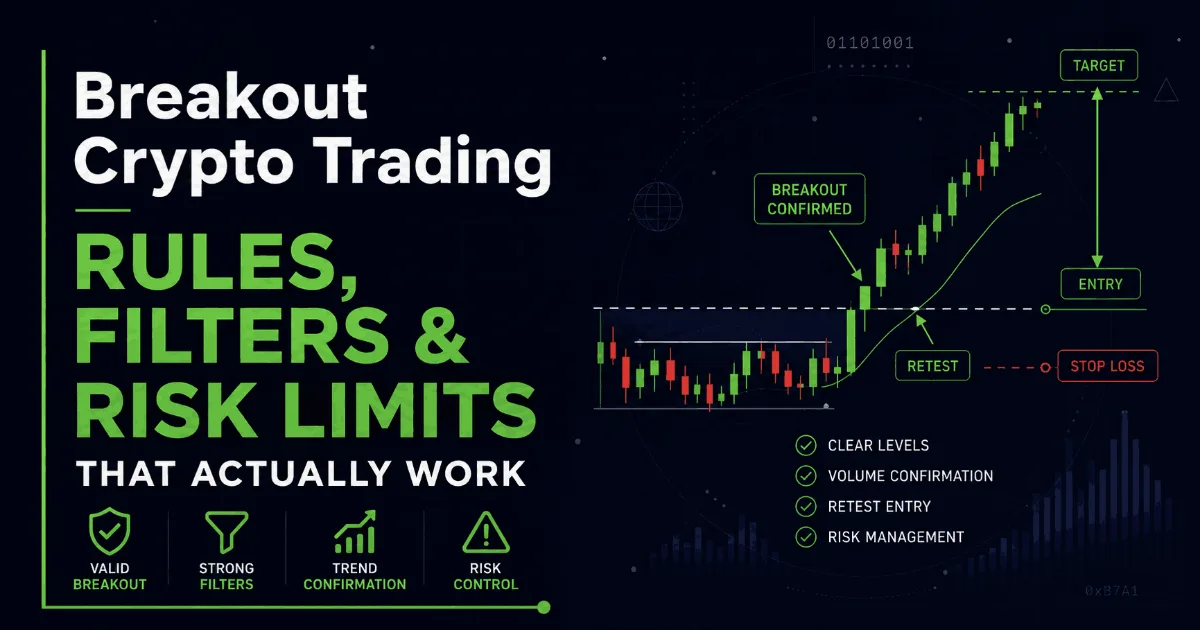
If your strategy trades breakouts, it’s often the opposite. Here, timing is the edge. Missing the move can cost more than the fee, so taker-style execution can be the correct choice – as long as you’re choosing it intentionally.
Exit execution:
This is where most traders leak money. They optimize entries, then blow it on exits when emotions hit. The classic pattern looks like this: maker entry → panic taker exit, which means your average fee rate rises and your worst slippage happens exactly when you’re stressed.
A cleaner approach is to plan exits with the same discipline as entries.
Decide in advance which exits must be instant (taker) – invalidations, stop-outs, fast risk-off moments – and which can rest (maker) – profit targets, partials, and structured scaling.
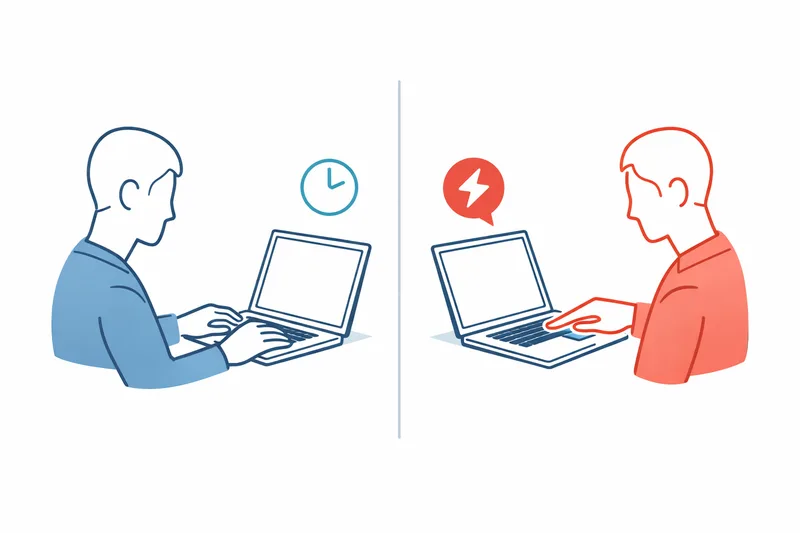
The bottom line is simple: maker saves on fees, taker buys certainty. Your edge improves when you decide deliberately, scenario by scenario, instead of defaulting into taker execution when the market speeds up.
Don’t overcomplicate this. The goal is to cut “accidental taker” behavior and keep taker fees only where they’re justified. A few habits that work well for intermediate traders:
Use maker-style entries when your edge doesn’t require instant fills.
Ranges, pullbacks, and mean-reversion setups often allow patience.
Save taker-style execution for moments where timing is the edge.
Breakouts, invalidations, and fast risk-off exits are common examples.
Track your maker/taker mix.
If 80–90% of fills are taker, you’re paying for speed constantly–maybe unnecessarily.
Treat exits as “execution design,” not emotion.
Decide beforehand which exits are “must fill now” and which can rest.
If you’re trading under an evaluation model, fees can also push you closer to your limits over time–so it’s worth checking the challenge rules and designing execution with those constraints in mind.
A simple action step: review your last 50–100 trades and label each fill maker/taker. You’ll immediately see whether fees are a real leak or just noise.
Crypto trading fees describes whether your trade added liquidity to the order book or removed it. A maker order typically rests on the book and waits (often a limit order placed away from the current price), which can support market depth. A taker order matches immediately against existing orders (commonly a market order, or a limit order placed aggressively enough to fill instantly).
Yes–and this is one of the most common points of confusion. A limit order becomes “taker” when it executes immediately because its price crosses into available liquidity. For example, if the best ask is 50,000 and you place a buy limit at 50,050, your order can fill instantly against the ask–meaning you removed liquidity like a taker.
In practice, almost always. A market order is designed to execute immediately at the best available prices, which means it matches against existing orders and removes liquidity from the book. That’s taker behavior. The tradeoff is clarity and speed: you reduce the chance of missing the trade, but you accept higher fees (taker rate) and potentially more spread/slippage in fast or thin markets.
Share it with your community