Crypto Reports
Expert insights, market analysis, and trading strategies.
Crypto moves fast, but most people don't lose money because they're "wrong." They lose money because they get rushed. A headline hits, the candle jumps, the timeline screams, and suddenly a trade becomes a reaction instead of a decision.
Crypto Reports is built to slow that moment down. This hub collects our market coverage in four lanes: Crypto News for the catalyst, Market Analysis for the setup, Crypto Trading for the mechanics, and Prop Trading for the rules and discipline that keep you consistent when volatility spikes. The point isn't to predict every move. The point is to build a repeatable process: understand what changed, see what price confirms, and control risk before you scale exposure.
If you're newer, start with trading basics and work forward. If you're experienced, use this as a daily workflow: news for context, analysis for scenarios, execution guides for cleaner fills, and prop content for risk frameworks that survive fast markets.
Browse by topic
Pick the section that matches what you need right now:
Crypto News
Crypto news is a volatility trigger. A single headline can widen spreads, flip sentiment, and turn a calm chart into a sharp move.
Market Analysis
Crypto market analysis that makes the next decision easier. Scenarios, levels, trend context and the conditions that confirm or invalidate each move.
Crypto Trading
Crypto trading strategies don't live or die on the idea. They live or die on execution. Two traders can take the same setup and end up with completely different results.
Prop Trading
Prop trading is where trading stops being a hobby and starts becoming a system. Simulated funded accounts can help you scale faster, but they also expose weak execution fast.
The simplest way to use this hub is a three-step filter: headline → chart → risk. If the news is real, price will hold and structure will form. If it's noise, the move will fade. Either way, the discipline is the same: don't chase, don't oversize, and don't let urgency make the decision for you.
Latest Articles
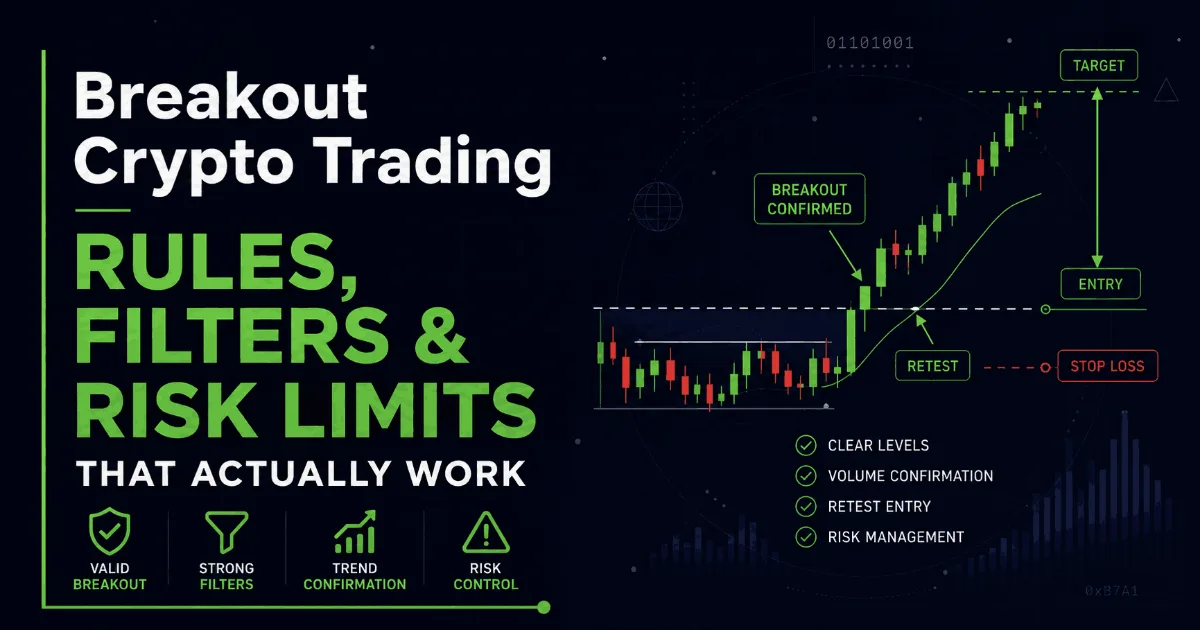 Crypto TradingAug 3, 2026
Breakout Crypto Trading: Rules, Filters, and Risk Limits That Actually Work
A breakout crypto strategy is only as good as its filters. Learn the exact rules for a valid entry, how to spot false breakouts, and how to size risk.
 Crypto NewsJul 31, 2026
New York Just Sued Kalshi and Called Prediction Markets Illegal Gambling
New York sued Kalshi on July 31, calling its prediction markets illegal gambling. The real conflict is a federal versus state jurisdiction fight.
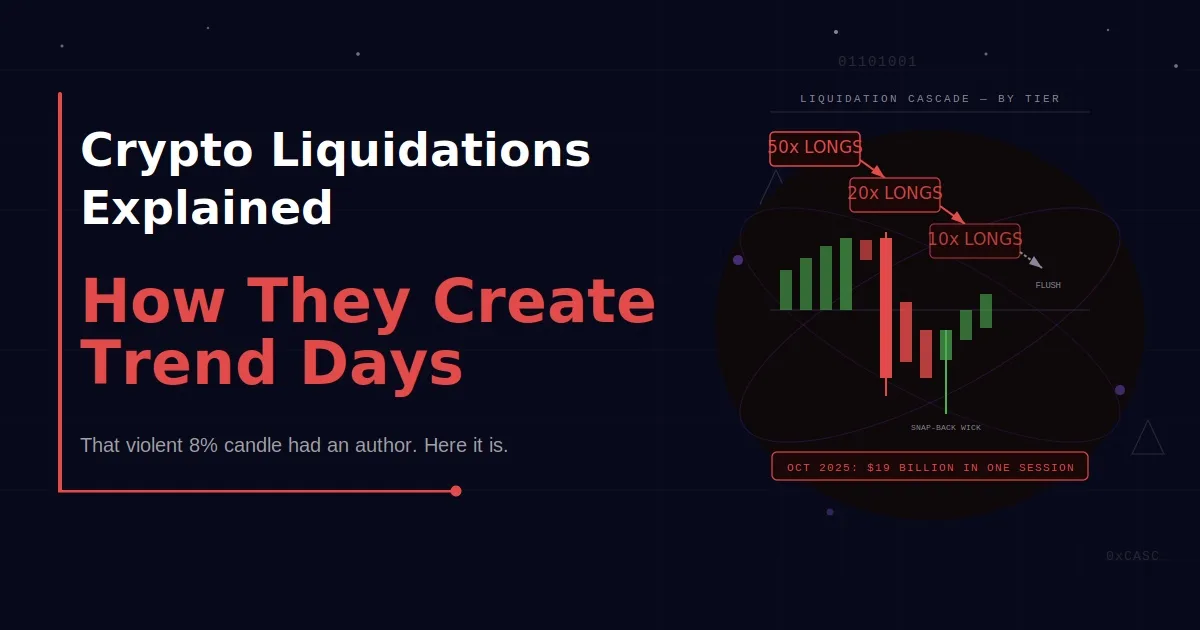 Crypto TradingJul 25, 2026
How Crypto Liquidations Move the Market and Create Trend Days
Liquidation cascades are why crypto moves in violent trend days and long wicks. Learn how forced selling snowballs, why it happens, and how to read the terrain.
Crypto moves fast, but most people don't lose money because they're "wrong." They lose money because they get rushed. A headline hits, the candle jumps, the timeline screams, and suddenly a trade becomes a reaction instead of a decision.
Crypto Reports is built to slow that moment down. This hub collects our market coverage in four lanes: Crypto News for the catalyst, Market Analysis for the setup, Crypto Trading for the mechanics, and Prop Trading for the rules and discipline that keep you consistent when volatility spikes. The point isn't to predict every move. The point is to build a repeatable process: understand what changed, see what price confirms, and control risk before you scale exposure.
If you're newer, start with trading basics and work forward. If you're experienced, use this as a daily workflow: news for context, analysis for scenarios, execution guides for cleaner fills, and prop content for risk frameworks that survive fast markets.


All information on this site is provided by Mubite for educational purposes only, specifically related to financial market trading. It is not intended as an investment recommendation, business advice, investment opportunity analysis, or any form of general guidance on trading investment instruments. Trading in financial markets involves significant risk, and you should not invest more than you can afford to lose. Mubite does not offer any investment services as defined under the Capital Market Undertakings Act No. 256/2004 Coll. The content on this site is not directed toward residents in any country or jurisdiction where such information or use would violate local laws or regulations. Mubite is not a brokerage and does not accept deposits. All trading accounts provided by Mubite are simulated demo accounts using live market data. No client funds are traded on live markets. Payout figures shown are individual results and are not typical. Past performance does not guarantee future results.
Mubite s.r.o., Školská 660/3, Nové Město, ICO: 23221551 Praha 1, 110 00, Czech Republic | Copyright Ⓒ 2026 Mubite. All Rights Reserved.