All information on this site is provided by Mubite for educational purposes only, specifically related to financial market trading. It is not intended as an investment recommendation, business advice, investment opportunity analysis, or any form of general guidance on trading investment instruments. Trading in financial markets involves significant risk, and you should not invest more than you can afford to lose. Mubite does not offer any investment services as defined under the Capital Market Undertakings Act No. 256/2004 Coll. The content on this site is not directed toward residents in any country or jurisdiction where such information or use would violate local laws or regulations. Mubite is not a brokerage and does not accept deposits.
Mubite s.r.o., Skolska 660/3, ICO: 23221551 Prague 1, 110 00, Czech Republic | Copyright Ⓒ 2025 Mubite. All Rights Reserved.

Gold and silver are ripping. Now oil is joining the move, pushing inflation expectations higher and making life harder for Bitcoin as a risk asset. With BTC already sensitive to macro headlines, this fresh energy rally on January 29, 2026, gives traders another reason to watch the tape closely.

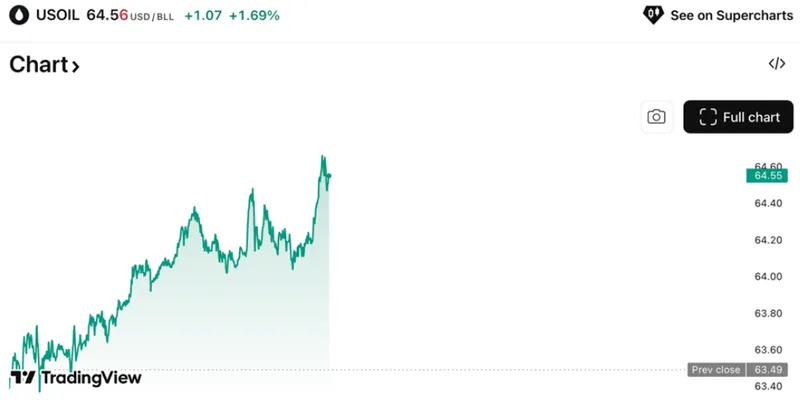
Oil prices are grinding higher for a third straight day, now hovering near the highest levels since late September. Benchmarks are up roughly five percent since Monday as traders reprice supply risks and inflation expectations after a brutal U.S. winter storm. The storm disrupted crude production, halted key Gulf Coast exports, and tightened near-term supply just as demand stayed resilient.
Geopolitics adds another layer. U.S. and Iran tensions remain elevated, with additional naval deployments raising fears of future disruptions in the Middle East. OPEC is also expected to keep output increases on hold at its next meeting, limiting supply growth into a tightening market. For readers wondering why crypto markets move so sharply, this article explains it in more detail.
When oil prices climb, markets often read it as an inflation warning. Higher energy costs bleed into transport, production, and consumer prices, nudging inflation expectations up. Central banks then face pressure to either stay hawkish for longer or at least avoid cutting too quickly, which keeps real yields elevated and financial conditions tight.
In that environment, liquidity tends to favor “safe haven” assets like gold over speculative corners of the market. Bitcoin is often marketed as “digital gold,” but real-world data shows it has recently traded more like a high-beta risk asset. During stress, gold absorbs flows while BTC trades alongside tech and growth stocks, especially when volatility spikes and leverage unwind.
This does not mean BTC must dump every time oil pops. It does mean the macro backdrop is less friendly. Rising oil and precious metals together can signal a rotation toward hard assets with lower perceived risk, leaving Bitcoin and other risk assets more vulnerable to liquidity squeezes.

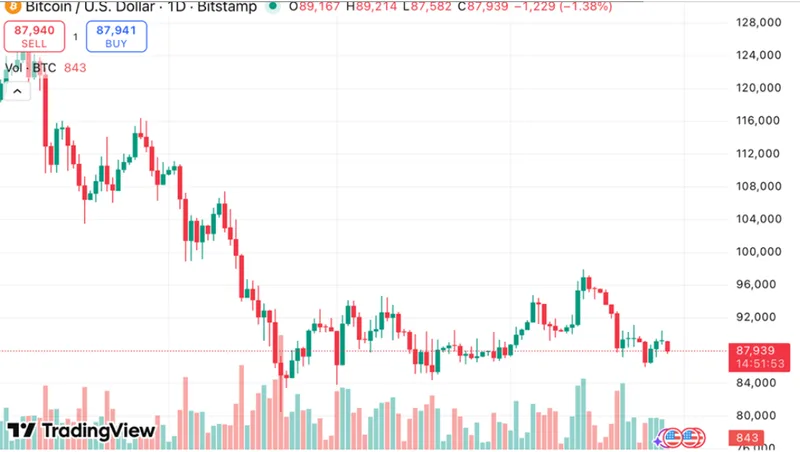
The key now is how BTC behaves while commodities stay strong. Pull up a chart for BTCUSD and treat it as the main chart for decision-making. Price action relative to key support and resistance zones will say more than any single headline, especially as oil headlines keep coming. A simple checklist can help keep things grounded:
Does BTC hold key support while oil and gold stay firm, or does it break down with other risk assets?
Do bond yields and the dollar rise alongside oil, confirming a broader risk-off shift rather than just a commodity story?
If oil cools and inflation fears ease, does BTC rebound quickly, signaling renewed liquidity appetite?
Taken together, these signals help distinguish between short-term noise and a genuine shift in market risk dynamics.
In fast macro-driven sessions, trading frictions matter more. Wider spreads and thinner books can increase slippage in crypto, especially around news releases. At the same time, maker vs taker fees can quietly eat into returns when traders chase moves with aggressive market orders.
That is where risk management stops being a buzzword and becomes a survival skill. Position sizing, maximum daily loss limits, and strict invalidation levels are central to any serious trading framework, as macro volatility in oil and BTC can turn a normal week into an account-ending one.
Oil has joined gold and silver in rallying, pushing inflation expectations higher and complicating the backdrop for Bitcoin as a risk asset. The causal chain is clear: higher oil, firmer inflation expectations, tighter policy risk, and a tougher environment for liquidity-driven trades in BTC
Because higher oil often lifts inflation expectations, which can keep interest rates and financial conditions tighter, reducing liquidity for risk assets like BTC.
No. BTC sometimes benefits from “hard asset” flows, but recent data shows it behaves more like a volatile risk asset than a consistent safe haven.
Focus on correlations with yields and the dollar, how BTC behaves around key support, and whether liquidity conditions are improving or tightening across risk markets.
Share it with your community