All information on this site is provided by Mubite for educational purposes only, specifically related to financial market trading. It is not intended as an investment recommendation, business advice, investment opportunity analysis, or any form of general guidance on trading investment instruments. Trading in financial markets involves significant risk, and you should not invest more than you can afford to lose. Mubite does not offer any investment services as defined under the Capital Market Undertakings Act No. 256/2004 Coll. The content on this site is not directed toward residents in any country or jurisdiction where such information or use would violate local laws or regulations. Mubite is not a brokerage and does not accept deposits.
Mubite s.r.o., Skolska 660/3, ICO: 23221551 Prague 1, 110 00, Czech Republic | Copyright Ⓒ 2025 Mubite. All Rights Reserved.

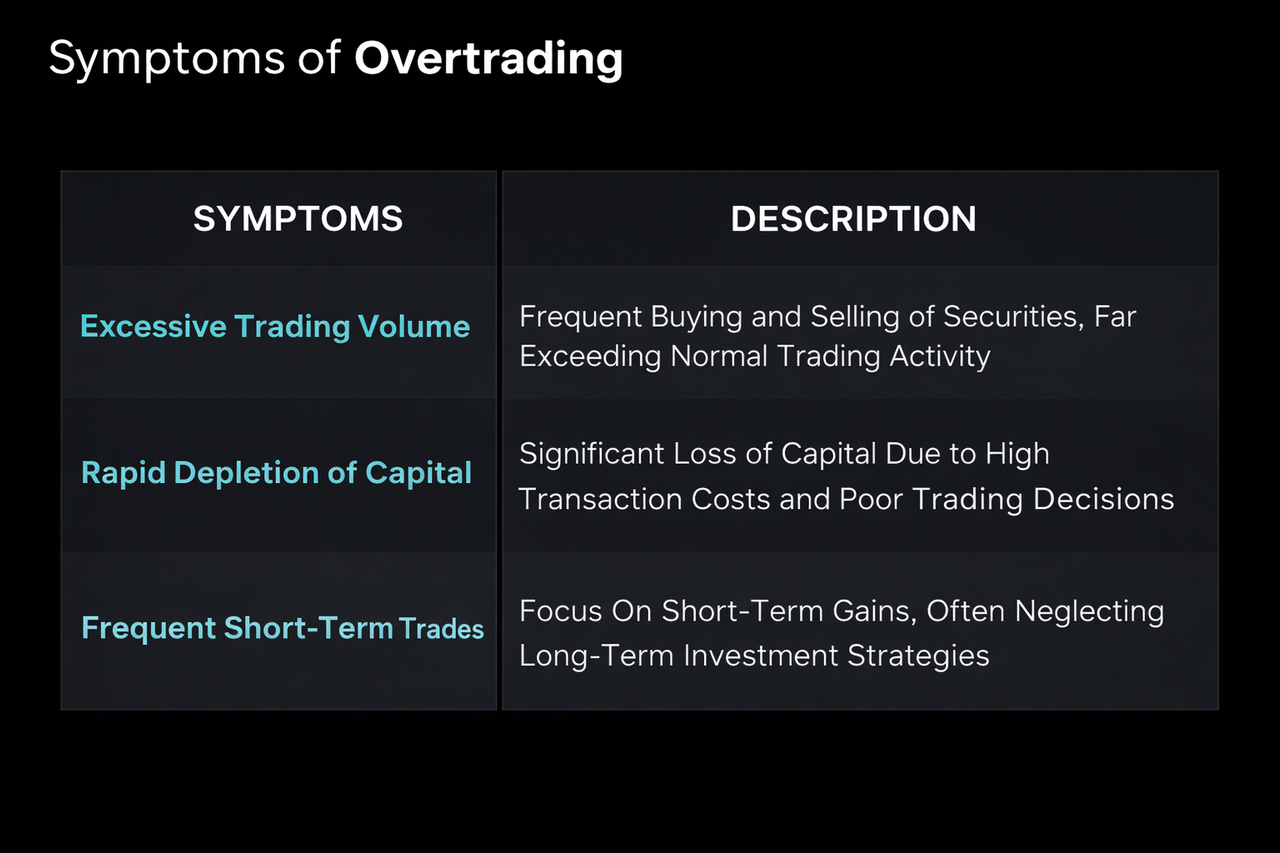
Overtrading and revenge trading are usually framed as “psychology issues,” but experienced prop traders tend to treat them as risk events. The market doesn’t blow most accounts up in one dramatic moment. The damage usually happens in a short window after a loss, when speed increases, standards drop, and the next trade is placed to change a feeling rather than express an edge.
On Mubite’s prop trading coverage, the theme is consistent: funded accounts don’t just magnify opportunity, they magnify weak execution and weak rules. Competitor prop-firm education says the same thing in different words–overtrading and revenge trades are repeatedly listed among the top reasons traders fail challenges because they collide directly with daily loss limits and max loss rules.
This article is a protocol–something you can follow while you’re not thinking clearly.
decision quality. A trader can take ten trades and still be disciplined if the plan demands it. Another trader can take three trades and still be overtrading if those trades weren’t earned.
The pattern often begins with something that feels rational: “I’m just looking for one clean setup.” Then it becomes scanning more markets, more timeframes, more entries–until you’re no longer executing a model. You’re reacting to stimulation.
Analysts who review trader behavior often describe the core failure mode as frequency without selectivity: when you trade to stay busy, you unintentionally raise exposure to random outcomes (fees, spreads, slippage, and plain variance), and you also increase the odds of emotional decision-making. That’s why many practical overtrading guides lead with structural constraints like trade caps and session blocks, not “be more disciplined.”

Revenge trading is overtrading with a motive: win back the loss now. It’s a mental pivot from “execute edge” to “repair the day.” BabyPips frames the recovery step in simple terms: step away and clear your head, because trading on emotion can reinforce the dangerous belief that “gut trading works” if you get lucky once.
In a funded context, revenge trading is expensive because it tends to break three guardrails at once:
Risk increases (size goes up, stops get wider, rules get bent)
Tempo increases (you give the market less time to prove your setup)
Quality decreases (you accept B/C setups because you “need” action)
Those are exactly the conditions that trip daily loss limits and max drawdown rules. When competitors explain prop failure modes, they almost always tie revenge trading back to violating risk parameters–not “bad strategy.”
When traders say “I knew I was tilted but I kept clicking,” they’re describing a state where the brain is trying to reduce discomfort quickly. The fix has to be fast and non-negotiable.
Here’s the circuit breaker:
Close positions, then close the platform.
Write one line: “I am not in a state to follow consistency rules.”
Leave the screen for 10 minutes (movement + water beats scrolling).
That “step back” move isn’t just feel-good advice; it’s the most common first step across trading psychology recovery guides, because it interrupts the feedback loop before it compounds.
The 24-hour reset exists for one reason: the next trade is the most dangerous trade. After an emotional loss, the urge is to “fix it.” But “fixing it” is usually just another attempt to control feelings with risk. The reset is intentionally boring:
No trading for 24 hours after a rule break or revenge sequence.
A short debrief (10 minutes): trigger → thought → rule broken.
Pre-commit re-entry constraints before the next session.
This matches what many prop-education sources recommend in practice: after psychological disruption, you recover by reducing discretion and restoring process.
If you want the long-game layer that reinforces daily routine after the reset, Mubite’s “Atomic Habits” piece supports the same idea: repeatable habits reduce the number of decisions you have to make under pressure.
Prop firm rules don’t just limit losses. They limit how much emotional damage you can do in a short time. That’s why overtrading feels harsher: more trades means more opportunities to slip a rule, stack correlated exposure, or “just this once” your risk plan.
There’s a second reason it feels harsher: prop rules are designed around constraint trading, not “freedom trading.” You don’t get unlimited time and unlimited drawdown to let a strategy wander back to profitability. The better your execution and pacing, the more comfortable the rules feel.
This is also why a recovery protocol should connect to sizing. Most “revenge spirals” aren’t just extra trades–they’re extra trades at the wrong size. Mubite’s position sizing guide is useful here because it turns the vague advice (“risk less”) into concrete sizing frameworks (fixed risk, ATR risk, volatility risk).
The mistake most traders make is returning to “normal mode” too early. They feel calm again and interpret that calm as readiness. A safer approach is staged re-entry, where the goal is control first, then performance.
Day 1 is proof-of-control. You trade as if you’re rebuilding trust with yourself: fewer trades, smaller risk, clean execution. Day 2 adds a little flexibility if Day 1 was rule-clean. Day 3 returns to normal only if the urge to “make it back” is gone.
This “reduce size after drawdown pressure” concept shows up across prop-firm education, often as a percentage reduction trigger when you’ve used a meaningful portion of your daily loss allowance.
The key is that the protocol is not about being timid. It’s about not letting one emotional session decide the entire evaluation.
Most overtrading fixes fail because they rely on willpower. Willpower is weakest when you’re tired, frustrated, or excited. The more robust approach is to install friction so you can’t spiral easily.
A practical model used across modern “tilt” and overtrading write-ups is: trade caps, stop times, and strict A+ criteria for a fixed period, because constraints reduce the number of impulsive entries available to you.
In funded trading, another guardrail that matters is payout structure and behavior around it. Traders often press when they’re “close” to an outcome (target, payout window, milestone), and that pressure can trigger impulsive entries.
Mubite’s payout explainer covers the reality that payout policies, timing, and caps change behavior–sometimes pushing traders into forcing trades when patience would be safer.
If you want a broader “category-level” context on how firms differ in rule design and where traders typically misread the fine print, Mubite’s updated rankings page frames comparisons around mechanics that decide real funded success (drawdown mechanics, payout friction, trader fit).
Overtrading and revenge trading don’t end because you learn the definition. They end when you stop allowing emotions to choose trade frequency and size.
The circuit breaker interrupts the spiral. The 24-hour reset restores control. The 72-hour re-entry prevents relapse. And the guardrails reduce how often you’ll need the protocol in the first place.
In prop trading, that’s the difference between “a bad session” and “a failed evaluation.”
If your trades match your written setup rules and your risk per trade stays consistent, you’re probably executing–not overtrading. Overtrading usually shows up when you start taking “maybe” setups, switching timeframes mid-session, or entering because you feel bored, rushed, or behind. A simple test is this: can you explain the exact reason for the trade in one sentence before you click? If you can’t, it’s usually impulse, not process.
Treat it like a risk incident, not a “bad day.” The first priority is stopping the damage by stepping away and preventing a second emotional round of trades. Then review what triggered the spiral and which rule broke first–trade frequency, position size, or chasing a move. When you return, reduce size and limit trade count for a couple sessions so you rebuild control before you try to rebuild profits.
Yes, but the recovery is usually slower than your emotions want. The safest approach is to focus on clean execution and small, repeatable wins rather than trying to erase losses in one session. Most traders get deeper into drawdown because they increase size or frequency after a loss, which raises variance and makes mistakes more likely. A controlled re-entry plan–smaller risk, fewer trades, and strict setup selection–gives you a realistic path back without tripping prop firm limits.
Share it with your community