All information on this site is provided by Mubite for educational purposes only, specifically related to financial market trading. It is not intended as an investment recommendation, business advice, investment opportunity analysis, or any form of general guidance on trading investment instruments. Trading in financial markets involves significant risk, and you should not invest more than you can afford to lose. Mubite does not offer any investment services as defined under the Capital Market Undertakings Act No. 256/2004 Coll. The content on this site is not directed toward residents in any country or jurisdiction where such information or use would violate local laws or regulations. Mubite is not a brokerage and does not accept deposits.
Mubite s.r.o., Skolska 660/3, ICO: 23221551 Prague 1, 110 00, Czech Republic | Copyright Ⓒ 2025 Mubite. All Rights Reserved.

Crypto trading pulls in thousands of new traders every day, drawn by headlines and market surges. Stories about quick gains spread fast. Excitement rises, and beginners step into the market with more emotion than preparation.
The first experience often feels intense. A breakout catches attention. Social feeds get louder. Friends mention recent wins. The urge to act grows until the entry feels automatic. Then the move slows. Price shifts. Confidence turns into pressure. The position closes early, and the market recovers without them.
Many new traders repeat that cycle until frustration becomes the final lesson. The issue is not the market. The issue is the lack of structure. Crypto rewards traders who stay patient during volatility. It rewards traders who build habits that support clarity, discipline, and long-term growth.
These habits replace stress with a clear plan. They turn uncertainty into a process. They keep you in the market long enough for skill to take shape.
Below are the five habits that help new traders succeed not just in crypto but also crypto prop trading. These habits support strong decisions, calm thinking, and more so, support the consistency every professional crypto trader relies on.
A trader without structure gets pulled into every impulse the market creates. A trader with structure moves with intention. Your framework is what keeps you steady when the noise rises and the market begins to move faster than your emotions can handle.

Before you touch a chart, be clear about why you are trading. Some people want short bursts of opportunity. Others want slow and steady growth. Some want a second income. Your purpose shapes your style. It guides your time frames, your risk, and your expectations. When you know why you trade, your decisions become clearer.
If you’re unsure how to start crypto prop trading, begin with a clear goal and a structure that supports your learning curve.
Beginners often jump from coin to coin because everything looks interesting. That scattered approach creates stress and inconsistent results. Pick a few markets and learn how they behave. Watch how they react during quiet periods and how they move during volatility. Familiarity builds confidence, and confidence supports better decision making.
Your entry criteria should be simple and written.
Which conditions must be present before I enter.
What confirms my setup and what invalidates it.
Which time frames do I trust?
If you cannot explain your setup in a few sentences, you will struggle to follow it when pressure rises.
A trade without an exit plan quickly becomes an emotional decision. Write down:
Where you will take profit
Where you will accept loss.
Clear exit rules prevent hesitation when the chart starts to move against you. They also keep you from holding winners too long out of greed or fear.
Professionals set their risk before they enter a trade. They know exactly how much they are willing to lose if their idea fails. Small risk creates longevity, and longevity gives you the chance to grow. Big risk may feel exciting, but it removes your ability to learn through repetition.
A written framework is not just a document. It is the foundation for every decision you make. It turns chaos into structure and keeps you centered when trading becomes stressful. With a clear framework, you stop reacting to the market and start executing your own process.
Crypto moves fast, and those movements can stir emotions before you even notice them. A quick surge creates excitement. A sharp dip creates fear. Both reactions are natural. What matters is how you behave while they unfold. Trading becomes far more difficult when your decisions shift with every candle.
The first step toward steadiness is trading small enough to think clearly. Many beginners jump into large positions because they want fast results. The size increases the pressure. Every move feels personal. Every pullback feels dangerous. When your position is too large, the market controls your reactions. When your position is manageable, your mind stays open and calm.
Steadiness also comes from your environment. A quiet space helps you focus on the process instead of chasing every tick. Checking the chart too often shakes your confidence and pulls your attention away from your plan. Step back. Slow down your view. Most good decisions come from a calm mind, not from staring at every tiny movement.
Let your rules speak louder than the noise.
Losses are another emotional trigger. After a loss, the urge to act quickly becomes strong. You want to fix it. You want to win it back. This is often referred to as revenge trading and it's the mindset that leads to impulsive trades and deeper losses. A short reset is often the better path. Walk away for a moment. Breathe. Return when your thinking is clear again.
Winning trades come with their own challenges. A profit feels good, and the temptation to hold for more appears. Many beginners turn strong trades into weak ones because they ignore their exit rules. Greed stretches the decision far beyond the plan. A clean exit protects your confidence and your account.
Staying steady is not about eliminating emotion. Emotion will always be part of trading. Steadiness comes from recognizing those feelings and choosing not to follow them. Your plan makes the decisions and good habits enforce it. The more often you act from structure instead of impulse, the faster your trading begins to stabilize.
A calm trader thinks clearly. A clear mind sees the market as it is, not as fear or excitement wants it to be.
Your capital is the engine of your trading. (With crypto prop trading you have the ability of upgrading your engine with accounts ranging from 10K all the way up to 200K.) Without it, everything stops. Protecting it is not optional. It's the foundation of every decision you make. Many beginners focus on finding the perfect entry, but the traders who last focus on survival first. They know that protecting the account gives them the time and space to grow.
Risk management starts with the idea that every trade is uncertain. Even good setups fail and strong trends reverse. If you respect this uncertainty, it builds habits that support long-term stability. These habits are simple and clear.

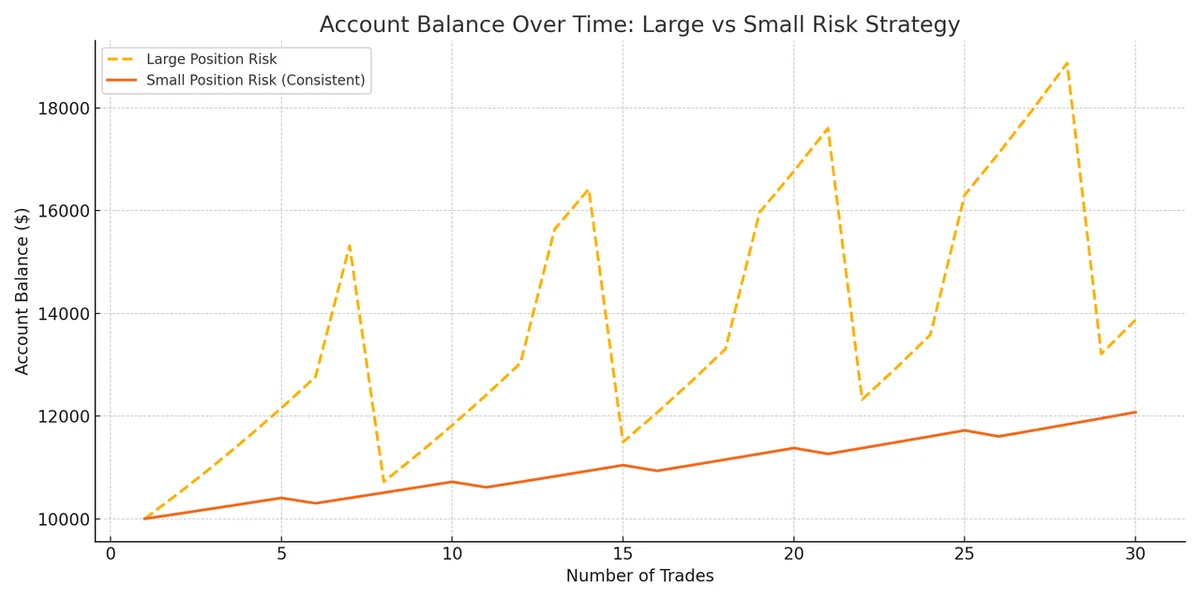
Large positions create pressure. Small positions keep your mind steady. Professionals rarely risk more than a small portion of their account per trade. They grow through consistency, not through oversized bets.
A stop loss is not a sign of fear. It is a form of protection. It ends the trade when your idea is proven wrong. It prevents a manageable loss from becoming a damaging one.
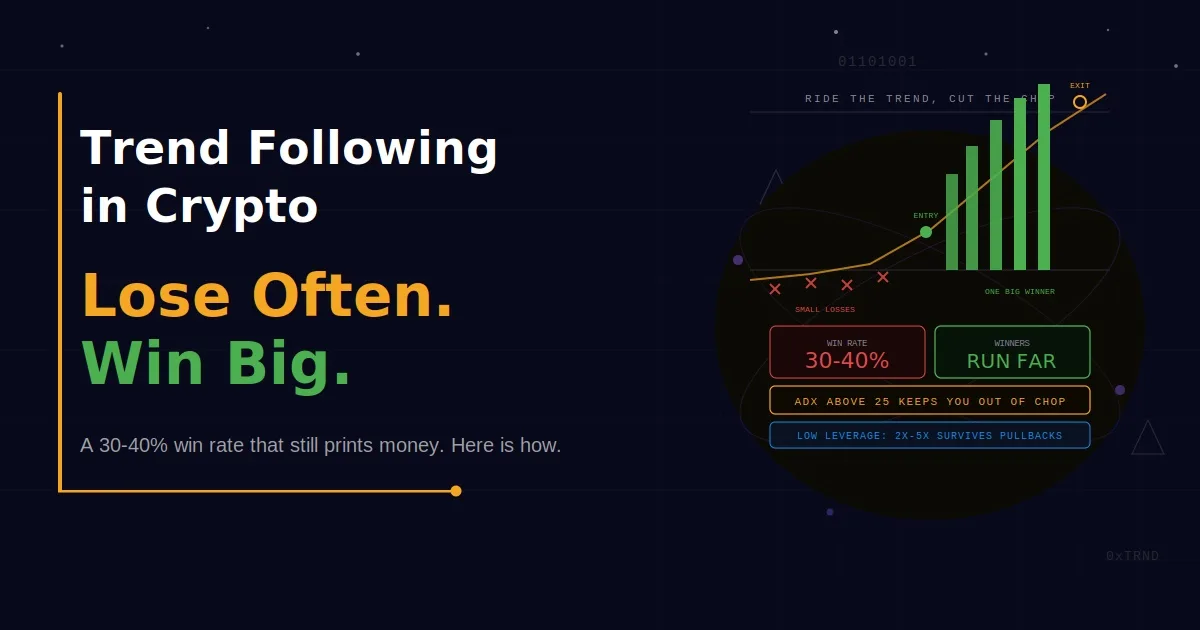
A strong trade risks less than it seeks to gain. This balance allows you to grow even with a modest win rate. Many beginners ignore this idea and eventually face losses that are difficult to recover from.
Not every move deserves your money. Patience protects your account. When you wait for quality setups, your decisions become clearer and your results become stronger.
Small risk builds longevity. Longevity builds skill.
Risk management doesn't remove the challenges of trading. It gives you structure that guides your decisions when the market shifts. It keeps you focused on the long game instead of chasing short-term excitement.
This is also why many traders explore funded trading. A funded crypto account gives you access to real capital without risking your personal savings. It creates an environment where you can practice discipline, follow rules, and develop professional habits while keeping your own money safe.
Protecting your capital is the habit that makes every other habit possible. It keeps you in the game long enough for your skill to grow.
Every trader reaches a point where the excitement fades and the real work begins. The early curiosity settles and the market becomes familiar. Then the challenge shows up. You start questioning your method. You start wondering if something else would work better. This is where many beginners lose direction.
A trading process gains power through repetition. You learn its strengths by seeing it work many times and its weaknesses by watching it fail and understanding why. This kind of knowledge only develops when you stay committed long enough to let the process show you its full range of outcomes.
Switching strategies too often prevents this growth. Many new traders abandon their approach the moment they face a few losses. They look for something new. They look for something easier. The results become inconsistent because the foundation never settles.
A clear example is a breakout trader who waits for retests. The setup appears often, but not always with perfect timing. Some breakouts happen without retesting. Beginners feel the urge to chase those moves because of FOMO. When they chase, the trade often fails, and their confidence drops. A disciplined trader waits for the retest because the rule is part of their process. Their consistency builds clarity, and clarity builds trust.
Consistency grows when your actions match your rules.
A process you trust becomes your anchor when emotions rise. It also becomes your filter. It helps you ignore noise and stay focused on the setups that fit your plan. When you commit to a process, you give yourself a chance to build a skill that lasts.
You do not need the perfect strategy to succeed. You need a strategy you can follow through the ups and downs of the market. Trust comes from time, discipline, and experience. Stay with your process long enough, and it begins to guide your decisions with calm and confidence.
Join Mubite and test your skills in a live-simulated market. Pass the challenge, earn funded capital, and prove your mindset matters more than hype. Start Your Crypto Funded Challenge Now
Trading rewards the trader who keeps learning. The market never stays still for long. It shifts from calm to volatile, from trending to choppy, from clear signals to confusing movement. A trader who treats this craft as something to study, rather than something to conquer, adapts far faster than someone who only looks for the next quick win.
One of the most effective ways to learn is by keeping a journal. A trading journal is not just a record of numbers. It is a record of your decisions, the thoughts behind them, and the emotions you felt while taking them. Over time, these notes reveal patterns that you cannot see in the moment.
A useful journal entry includes four simple elements:
Why the setup made sense, and what you expected to happen.
Your entry, stop, target, and the conditions that defined the idea.
Stress, confidence, hesitation, or impatience. These emotions matter.
What you learned, and what you would repeat or change next time.
Consistency is not an outcome.
It is a habit repeated long enough to become instinct.
This kind of self-review builds awareness. For example, after a few weeks of journaling, you might notice that most of your losing trades came from impatience during slow markets. You might also notice that the trades you entered calmly, using your full process, performed better than expected. Insights like these shape your growth far more than trying a new indicator ever will.
A student mindset also means paying attention to the market itself. Watch how price reacts to key levels. Watch how volume behaves during breakouts. Watch how the chart moves during different times of day. The more you observe, the more intuitive your decisions become.
Learning is a continuous cycle. You trade, you reflect, you adjust. Each cycle sharpens your skill and strengthens your discipline. Over time, this approach turns confusion into clarity and randomness into structure.
A trader who keeps learning stays in the game. A trader who stays in the game eventually grows.
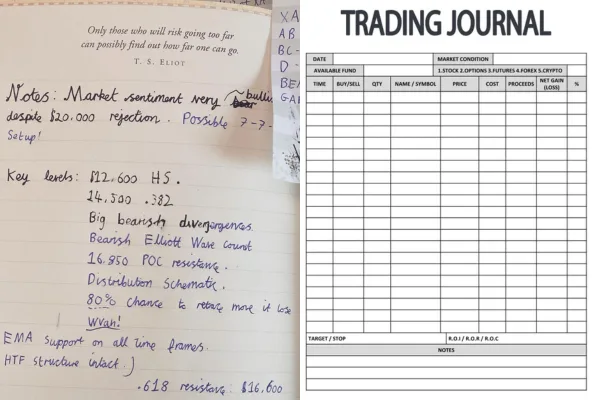
Below is a sample written journal entry or a blank journal template easily found with a quick google search

Every trader enters the market with ambition. Some want fast results. Others want a chance to build something long term. Most find out quickly that excitement alone is not enough. What keeps you growing is the set of habits you build along the way.
A clear framework gives you direction. Steadiness helps you make decisions when the market becomes unpredictable. Risk management protects your capital so you can keep trading tomorrow. Trust in your process strengthens your consistency. A commitment to learning turns every experience into progress. These habits support each other. Together, they shape the foundation of a trader who lasts.
Crypto rewards patience, structure, and a willingness to improve. When you trade with intention instead of impulse, you give yourself the chance to grow into the trader you want to become.
And as your skills develop, you will eventually want more room to apply them. You will want capital that matches your ambition. You will want an environment where your discipline gets rewarded. That is where Mubite becomes valuable.
As a serious crypto trading firm, Mubite gives traders instant access to funding. It provides real market conditions on Bybit, fast payouts, and profit splits that support serious growth. You bring the skill. We provide the capital. Together, you have the space to trade with confidence.
Start building your next step.
Give your strategy the backing it deserves.
Trade with Mubite today.
Build Strong Risk Habits – An inside look at the four risks that end most prop traders and the habits that help you survive them.
Crypto Hedging Explained – Explore how crypto hedging strategies help prop traders protect capital, manage drawdowns, and stay in the game longer.