All information on this site is provided by Mubite for educational purposes only, specifically related to financial market trading. It is not intended as an investment recommendation, business advice, investment opportunity analysis, or any form of general guidance on trading investment instruments. Trading in financial markets involves significant risk, and you should not invest more than you can afford to lose. Mubite does not offer any investment services as defined under the Capital Market Undertakings Act No. 256/2004 Coll. The content on this site is not directed toward residents in any country or jurisdiction where such information or use would violate local laws or regulations. Mubite is not a brokerage and does not accept deposits.
Mubite s.r.o., Skolska 660/3, ICO: 23221551 Prague 1, 110 00, Czech Republic | Copyright Ⓒ 2025 Mubite. All Rights Reserved.

Every trader eventually discovers the same tension.
You join a crypto prop firm. You start trading. A rule triggers. A limit steps in. Something prevents you from continuing the way you wanted. And the immediate thought is almost always the same: Why are these restrictions here?
I’ve seen that reaction for years.
I’ve also seen what happens when traders step back and look at the bigger picture. Because once you understand why prop firms for crypto traders have rules, how they’re shaped, and what they’re actually protecting, the relationship shifts. Rules stop feeling like obstacles. They start becoming part of your structure.
That’s what this article is about.
Not the rules themselves, but the philosophy behind them. And how you, as a serious trader, can use them to sharpen execution rather than limit it.
When you trade your own money, there are no limits.
You can overexpose. You can revenge trade. You can double down on a losing position out of frustration. The market won’t warn you. It will just punish you.
A prop firm cannot operate like that.
It’s not one person’s account. It’s a shared crypto prop trading ecosystem where the survival of the entire structure depends on how well risk is controlled. This is especially true in crypto trading, where volatility isn’t an occasional event but it’s the environment itself.
Rules exist because:
• real capital is being deployed
• trader performance varies wildly
• emotional decisions are the biggest threat to funded stability
• volatility can erase months of progress in minutes
• consistency is only possible with boundaries
Remove the rules, and you don’t have a prop firm anymore. You have a casino with leverage.

Most frustrations come from a simple misunderstanding:
Traders assume rules are designed to stop them from making money.
In reality, rules exist because the market doesn’t give second chances.
A daily loss limit doesn’t prevent you from trading.
It stops you from making an emotional decision that could undo days of progress.
A max loss rule isn’t a constraint.
It’s a safeguard, ensuring one mistake doesn’t end your entire path.
A position size limit doesn’t hold you back.
It ensures you’re trading with intent, not on impulse.
All these limits have the same purpose:
They protect both you and the firm from the emotional mistakes that often lead to poor decisions.
For a more in depth look at why traders lose money, check out our in depth guide on the psychology of trading.
“The rules aren’t there to hold you back. They’re there to keep you from holding yourself back.”
I’ve watched thousands of traders go through challenges and funded accounts.
Their relationship with rules almost always follows the same progression.
Beginners feel rules as friction.
They want more flexibility. More room to experiment. More “freedom.”
They see limits as walls that block creativity or opportunity.
After a few blown accounts (personal or prop firm crypto), the realization forms:
Most large losses were emotional, not strategic.
And almost all of them would have been prevented by a simple boundary.
This is where serious traders begin to build their entire system around the rules.
Risk per trade adjusts.
Session limits tighten.
Position sizing becomes more precise.
Execution becomes predictable.
The irony is that the more disciplined a trader becomes, the less they notice the rules.
Because their own framework is now stronger than the firm’s minimum requirements.
Here’s what many traders don’t realize:
Rules create the environment where skill can compound.
Without a daily drawdown rule, emotions would dominate.
Without max loss limits, one bad morning could destroy a funded crypto account.
Without position caps, traders would bet half the account on setups they haven’t fully validated.
Without consistency requirements, payouts would swing wildly between luck and burnout.
Structure is what makes long-term crypto trading possible.
Without it, everything becomes random.
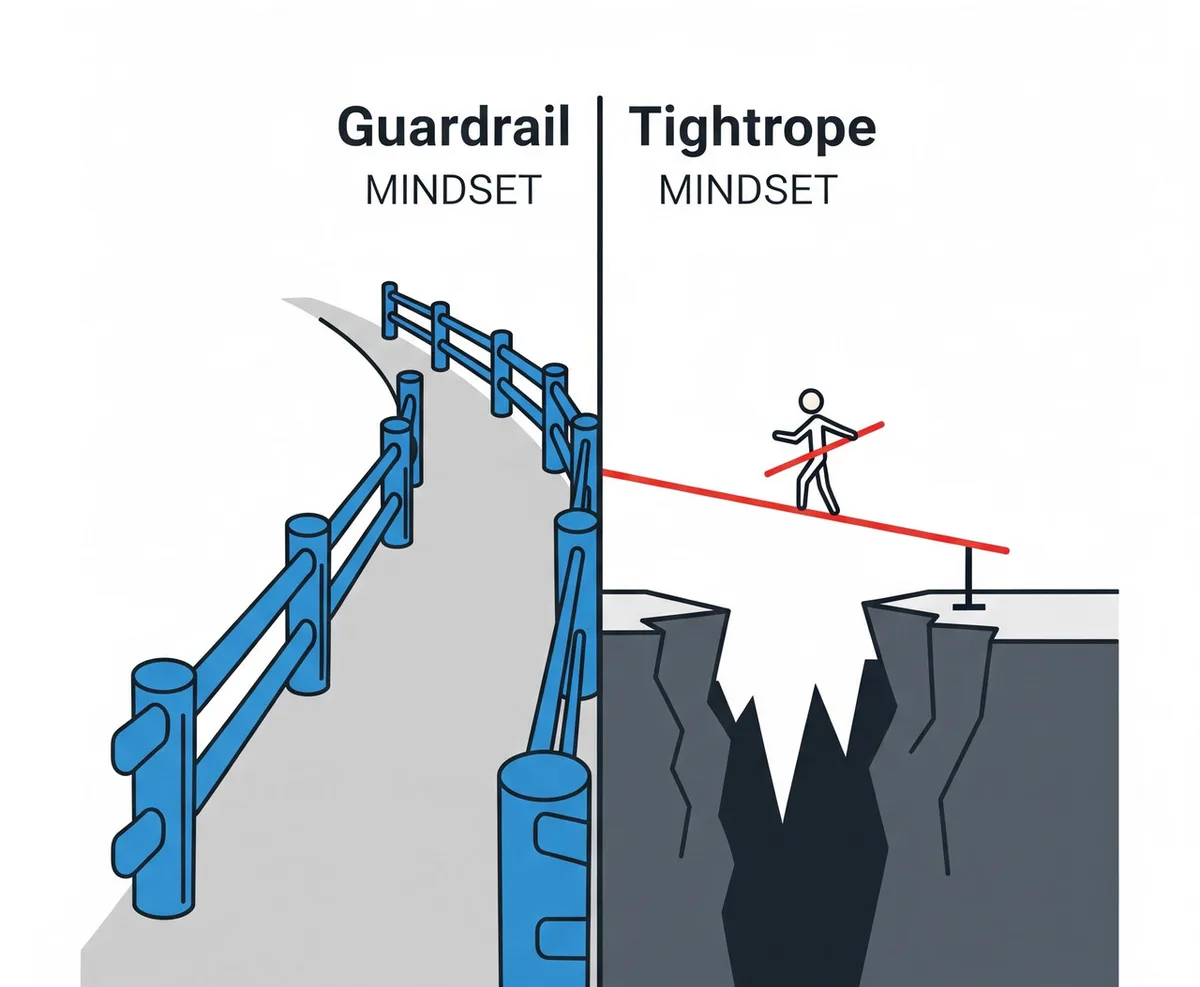
Prop firms don’t create rules to restrict traders. They create rules to stop chaos from creeping into the system.
When a trader reaches consistency, the rules start to fade into the background.
Daily limits turn into natural sessions.
Max loss becomes a level you never approach.
Position size caps match exactly what your strategy requires.
Soft breaches become irrelevant because your habits protect you before the rules do.
You stop asking “How much can I get away with?”
and start asking “How can I make my process stronger inside these boundaries?”
That mindset is the foundation of passing funded trading challenges and staying consistent after you reach funding.
Most traders think rules are designed to slow them down.
However, rules create clarity, and that clarity speeds up progress
It’s something every serious trader spends years trying to build.
“Rules don’t stop your progress, they shape it.”
There’s one trader I remember clearly. I’ll call him Daniel.
He wasn’t inexperienced. In fact, he understood the market better than most. He had a strategy for breakouts, a separate approach for ranges, and he’d spent enough time on charts to know when price action was clean and when it wasn’t.
But his results were always unstable.
When he traded his own account, he would go through cycles familiar to many traders: two solid weeks of disciplined execution followed by one emotional day that erased everything. A missed entry turned into frustration. Frustration turned into bigger size. Bigger size turned into hesitation. And the cycle repeated.
He didn’t need more talent.
He needed something to stop that spiral before it started.
When Daniel moved into a structured environment with clear rules, he told me it felt tight at first. The daily loss limit cut him off earlier than he wanted. The position size rules forced him to scale down on trades he believed were “worth pushing.” The max loss felt like a ceiling he didn’t want to get too close to.
But within a month, something changed.
His results began smoothing out.
He stopped trying to “catch up” after a slow morning because the daily loss limit didn’t give him the room to chase. He couldn’t double his position size just because the setup felt strong. He couldn’t dig himself into a hole because the guardrails didn’t allow it.
And instead of fighting the structure, he started working within it.
His equity curve shifted from wide swings to a steady climb.
His confidence improved, not because he was winning more trades, but because his losing days were controlled. Risk per trade became predictable. His routine stabilized. When he finally hit his first payout, he told me something simple:
“This is the first time I’ve ever been forced to slow down enough for my actual skill to matter.”
Daniel didn’t thrive because the market became easier.
He thrived because the rules finally removed the parts of his trading that kept pulling him off track. The structure didn’t limit his potential. It protected it.
I’ve seen many traders follow the same path.
Some don’t realize how fast they’re moving until a rule makes them pause.
And for the ones who lean into that pause, consistency finally becomes possible.
One of the clearest signals of a trader’s development is how they respond to structure. Early in the journey, rules feel restrictive. The daily loss limit looks like a barrier. The max loss feels like the firm is “holding you back.” It’s normal. Every trader begins with a desire for freedom because they believe freedom equals opportunity.
As you gain more experience, your relationship with those limits changes.
You start to understand that rules aren’t there to control you, but to protect you from the behaviors that usually appear under stress. You begin to see patterns in your own execution; how a single loss can shift your thinking, how frustration alters your sizing, how one emotional move can undo days of progress. And instead of resisting the boundaries, you start appreciating them.
At a mature stage, the rules almost disappear. Not because they’re gone, but because your own system becomes stricter than the firm’s minimum requirements. Your daily risk is already smaller than the limit. Your sizing is consistent. Your routine has built-in reset points. The firm’s rules simply sit outside your process as a safety net you hardly touch.
In that sense, rules don’t just guide your trading.
They reveal where you are in your development.
The more comfortable you become trading inside a structure, the more consistency you build and the closer you get to trading with the calmness of someone who understands exactly what they’re doing.

Crypto’s risk profile is different.
It moves faster, breaks harder, and punishes hesitation quicker than any traditional asset class.
A single liquidation cascade can create more volatility in one hour than EURUSD sees all week.
For this reason, crypto prop firms don’t design rules to mirror Forex.
They design rules to survive a market where:
• weekends move like weekdays
• altcoins regularly produce 8 to 15 percent swings
• funding rates distort positioning
• thin orderbooks create sudden spikes
• volume dries up without warning
You’re not being restricted.
You’re being protected from an environment that doesn’t care how talented you are.
Without structure, even experienced traders drift into trouble.
Every firm has its own philosophy.
At Mubite, we build rules with a simple idea in mind:
Rules should protect opportunity, not reduce it.
That’s why we focus on:
• transparency over surprises
• crypto-specific risk controls
• soft breaches that allow recovery
• smart drawdown that moves with your progress
• scaling paths designed for long-term stability
The goal isn’t to catch traders making mistakes.
The goal is to give them the environment where mistakes don’t end their journey.
Instant access to funding only works if the structure behind it is solid.
And structure only works if traders understand how to use it.
Prop firm rules often frustrate traders in the early stages.
That’s normal.
Everyone goes through that phase.
But as you grow, something changes.
You stop seeing the boundaries as something restrictive.
You start seeing them as the framework that keeps you consistent, sharp, and stable.
You start realizing they’re not designed to block you, they’re there to keep you in the game long enough to succeed.
Trading without structure invites chaos.
Trading within structure gives your skill a place to grow.
That's the real value of prop firm rules.
They aren’t there to make trading harder.
They’re there to make long-term success possible.
If you’re ready to trade with a partner who builds structure around the trader and not against them, you know where to find us.
Your skill. Our capital.
Trade with clarity. Trade with Mubite.