All information on this site is provided by Mubite for educational purposes only, specifically related to financial market trading. It is not intended as an investment recommendation, business advice, investment opportunity analysis, or any form of general guidance on trading investment instruments. Trading in financial markets involves significant risk, and you should not invest more than you can afford to lose. Mubite does not offer any investment services as defined under the Capital Market Undertakings Act No. 256/2004 Coll. The content on this site is not directed toward residents in any country or jurisdiction where such information or use would violate local laws or regulations. Mubite is not a brokerage and does not accept deposits.
Mubite s.r.o., Skolska 660/3, ICO: 23221551 Prague 1, 110 00, Czech Republic | Copyright Ⓒ 2025 Mubite. All Rights Reserved.

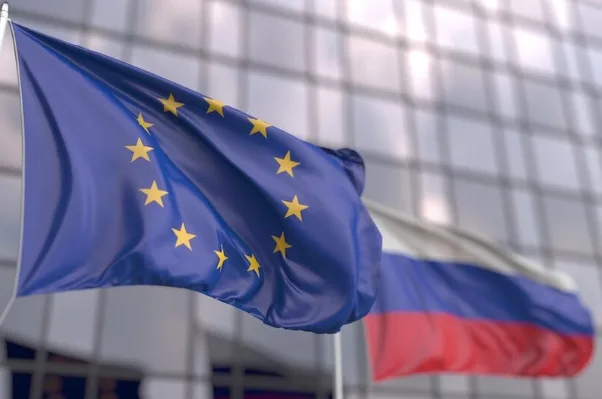
The European Union is proposing a blanket ban on cryptocurrency transactions linked to Russia as part of its 20th sanctions package announced February 6. The goal is to close loopholes allowing Moscow to bypass traditional banking restrictions through crypto.

The proposal marks a shift from the EU's previous approach. Until now, Brussels sanctioned individual Russian crypto platforms. When one got blacklisted, successor operations appeared.
The new plan takes a blanket approach. Internal EU documents show the proposal would prohibit interaction with any crypto service provider based in Russia. It would also ban using platforms for crypto transfers that operate from Russian territory.
This requires unanimous approval from all 27 EU member states. Three countries have expressed concerns. The Commission targeted adoption by February 24.
For Mubite traders, the implications are structural. EU-regulated exchanges would need to block Russian users and implement stricter screening.
Crypto's borderless nature creates enforcement challenges. Value moves across jurisdictions without traditional intermediaries. EU officials worry that as bank oversight tightens, illicit actors turn to digital assets.
Evidence shows Russian entities have used crypto channels to maintain financial access despite sanctions. EU imports of priority goods to Kyrgyzstan surged 800%. Kyrgyz exports to Russia jumped 1,200%. The EU is now considering export bans on dual-use goods to Kyrgyzstan.
Understanding how crypto transactions work explains why regulators view crypto as a sanctions risk. Transactions don't require banking rails. The challenge: centralized exchanges can be regulated, but decentralized protocols are harder to block.
The proposal specifically targets several areas. The digital ruble, Russia's central bank digital currency, would be banned completely. It's scheduled for mass rollout in September 2026.
The A7A5 stablecoin is another focus. Daily volume dropped from $1.5 billion in mid-2025 to $500 million in January after initial sanctions. But the user base grew to 35,500 accounts from 14,000 in July.
The payment platform A7 and Garantex successors are in scope. Garantex was Russia's largest crypto exchange before sanctions. Mirror operations emerged after blacklisting.
For traders, compliance pressure increases. EU exchanges will need to geofence Russian users, block sanctioned wallets, and tighten stablecoin controls. Risk management becomes critical when regulatory landscapes shift.
The package extends beyond crypto. It bans 20 more regional Russian banks, cuts them from SWIFT, and restricts €360 million in exports plus €570 million in imports. Maritime sanctions target 43 additional "shadow fleet" vessels.
The proposal signals a tougher EU stance on crypto-related sanctions evasion. But implementation depends on unanimous member-state approval. The Commission targeted February 24 for adoption. That timeline may slip. Watch for:
Council approval: Unanimous consent required. Any member state can block it.
Implementation guidance: Legal text will define covered activities and entities.
Industry compliance: How exchanges interpret and implement the rules.
DeFi migration: Whether users shift to decentralized protocols.
EU sanctions envoy David O'Sullivan visits Kyrgyzstan February 26 to discuss third-country circumvention. The outcome could signal enforcement intensity.
The effectiveness of crypto sanctions remains uncertain. Past evidence suggests bans on centralized exchanges push activity toward peer-to-peer and DeFi channels. But the proposal shows digital assets are now treated as strategic components of sanctions enforcement, not peripheral technology. Markets may react to policy uncertainty. When similar crackdowns occurred,trading fees during volatility widened as liquidity providers adjusted.
The EU's 20th sanctions package targets Russia with crypto transaction bans, digital ruble restrictions, banking sanctions, export controls on dual-use goods, and maritime sanctions on Russian oil. It was announced February 6, 2026.
The EU aims to close loopholes allowing sanctions evasion through digital assets. Previous attempts to sanction individual platforms failed as successor operations emerged. The blanket ban systematically cuts off crypto as a bypass tool.
The ban requires unanimous approval from all 27 EU member states. The Commission targeted February 24, 2026, but three countries have concerns. Timing depends on resolving these issues and finalizing the legal text.
Share it with your community